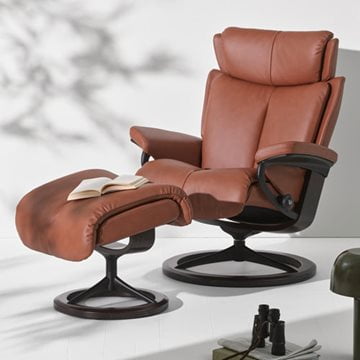
When trying a recliner, pay attention to:
- lumbar support in upright and reclined positions
- how smoothly the chair moves with you as you recline
- if the size suits your height and build
- how supported your neck, back and legs feel
- whether the recliner remains comfortable after sitting for an extended period
Recliner checklist:
-
Sit longer than you normally would
Great comfort often reveals itself over time rather than in the first few moments. -
Notice how the recliner adapts to you
Does the gliding movement adjust naturally to the weight and movement of your body?
Tip: The glide wheels can be adjusted to the right level of friction and the recliner will follow even your smallest movements. -
Check lumbar support
Does the recliner provide consistent lower back support in both upright and reclined positions? -
Assess stability and build quality
Does the recliner feel robust, stable and secure as you sit down, recline and change position? -
Evaluate the fit
Are the height and width right for your body, allowing you to sit comfortably in all positions? -
Pay attention to full-body comfort
Notice whether your shoulders, neck, back and legs relax naturally without creating pressure points. -
Position the ottoman correctly
Does the adjustable ottoman provide full leg support and help you maintain a comfortable, relaxed posture? -
Compare different Stressless® models
Comparing different models helps you identify which level of support and comfort suits you best.
If high back recliner:
Test the Sleep function. Can you adjust the headrest so that it lies flat when you recline while continuing to support your head and neck?
Final tip:
Take your time. A recliner is not just about initial comfort. The best recliners continue to support your body and adapt to your movements throughout the day.